

The Mazda CX-5 and Mazda CX-50 are often compared because they sit close together in Mazda’s SUV lineup, but they are engineered with different intentions. Both are built around Mazda’s core philosophy of connection between driver and vehicle, yet the way they achieve that connection feels distinct once you are behind the wheel.
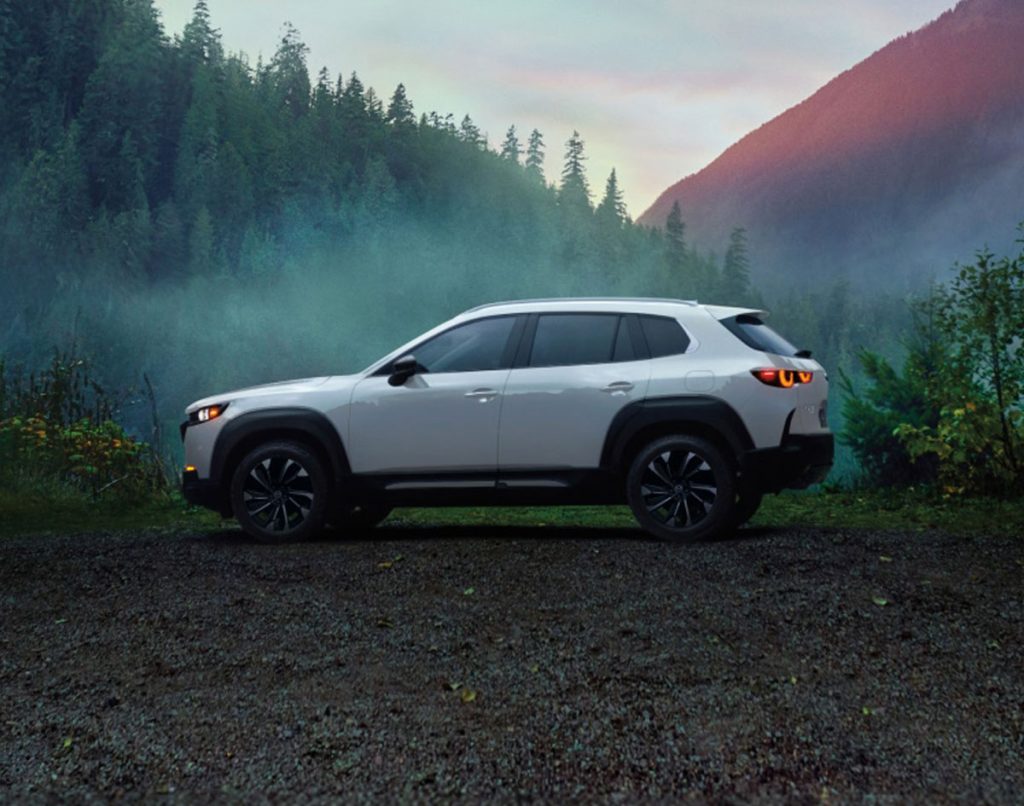
For drivers, the question is not simply which one is better. It is how each vehicle responds to the road, how it absorbs imperfections, and how it supports different types of driving. Understanding those differences requires looking beyond features and into how each SUV is designed to move.
How the Mazda CX-5 and CX-50 Are Engineered for Different Driving Feel
Many shoppers researching the Mazda CX-50 vs CX-5 ask what the real difference is in how they drive. The answer begins with how each vehicle is tuned and positioned.
The Mazda CX-5 is engineered with a focus on balanced on-road refinement. Its suspension tuning prioritizes smoothness, controlled body movement, and a quiet cabin experience. Steering input feels precise but relaxed, allowing the vehicle to settle into corners without feeling overly rigid.
The Mazda CX-50 is designed with a more grounded and planted feel. Its chassis and suspension are tuned to handle a wider range of surfaces, including uneven terrain. Steering response is slightly firmer, and the vehicle maintains a more connected feel to the road surface.
This difference is not about one being better than the other. It reflects two different approaches to driving:
- The Mazda CX-5 emphasizes composure and fluid motion on paved roads
- The Mazda CX-50 emphasizes stability and confidence across varied surfaces
These engineering decisions shape how each vehicle responds during everyday driving.
Suspension, Tires, and Ride Quality Differences
Why does the Mazda CX-50 feel more rugged, and why does the Mazda CX-5 feel smoother? The answer comes down to physical components like suspension tuning, tire design, and ride height.
The Mazda CX-5 uses a suspension setup that prioritizes absorbing small road imperfections. This creates a smoother ride over uneven pavement and reduces the amount of vibration felt inside the cabin. Tire sidewalls and wheel configurations are also tuned to support comfort and quiet operation.
The Mazda CX-50 takes a different approach. It uses a slightly higher ride height and tire configurations designed to handle a broader range of surfaces. Tires with more sidewall flexibility can better absorb impacts from uneven terrain, but they also transmit more road texture to the driver.
These differences influence how each vehicle behaves:
- The Mazda CX-5 reduces road feedback for a quieter, more relaxed ride
- The Mazda CX-50 allows more road feedback to improve control on uneven surfaces
- The Mazda CX-50’s increased ground clearance supports light off-road driving
- The Mazda CX-5 remains more composed on consistently paved roads
For drivers who spend most of their time on city streets and highways, the CX-5’s smoother ride often feels more natural. For those who encounter mixed terrain, the CX-50’s setup provides added confidence.
Driving Position and Driver Control Perception
How does seating position change the way each vehicle feels to drive? The Mazda CX-5 and Mazda CX-50 approach driver positioning differently, and that difference affects perception and control.
The Mazda CX-5 places the driver in a slightly more traditional SUV seating position. The cabin layout is designed to feel centered and balanced, with clear forward visibility and a sense of being integrated into the vehicle. This positioning supports relaxed driving and predictable control.
The Mazda CX-50 positions the driver slightly lower and more horizontally aligned with the vehicle’s structure. This creates a more grounded feeling, similar to what drivers experience in vehicles designed for varied terrain. The result is a stronger sense of connection to the road surface.
These differences influence driver confidence in subtle ways:
- The Mazda CX-5 supports ease of use and comfort in daily driving
- The Mazda CX-50 enhances awareness of terrain and vehicle positioning
- The Mazda CX-50’s layout can feel more engaging in less predictable conditions
Driver perception plays a significant role in how a vehicle feels, even when performance specifications are similar.
How Each SUV Performs in Real-World Driving Scenarios
Which Mazda SUV performs better depends on where and how it is driven. Instead of focusing on specifications alone, it helps to look at how each vehicle behaves in common driving situations.
In city environments with consistent pavement, the Mazda CX-5 delivers a smoother and quieter experience. Its suspension absorbs road imperfections, and its steering remains predictable in stop-and-go traffic.
On highways, both vehicles perform confidently, but the CX-5 maintains a slightly more refined ride over long distances. Cabin isolation and smooth power delivery make it well suited for extended driving.
In mixed conditions, including gravel roads or uneven surfaces, the Mazda CX-50 begins to show its advantages. Its suspension and tire setup allow it to maintain stability, while its ground clearance helps prevent contact with uneven terrain.
For drivers who move between different types of roads, the CX-50 offers versatility. For those who primarily stay on paved surfaces, the CX-5 provides a more relaxed and composed experience.
How to Choose Between Mazda CX-5 and CX-50 Based on Driving Priorities
Which Mazda SUV should you choose ultimately comes down to how you drive and what you expect from the vehicle.
If your driving is centered around commuting, city traffic, and highway travel, the Mazda CX-5 offers a refined experience that prioritizes comfort and smoothness. It is designed to make everyday driving feel controlled and effortless.
If your driving includes varied terrain, outdoor travel, or conditions where road surfaces are less predictable, the Mazda CX-50 provides a more adaptable setup. Its design supports stability and control when conditions change.
When deciding between the two, consider:
- The type of roads you drive most often
- Whether comfort or terrain capability is a higher priority
- How much road feedback you prefer while driving
- Whether your driving conditions change frequently
Both vehicles reflect Mazda’s focus on driver connection, but they express that philosophy in different ways. The CX-5 refines the experience of everyday driving, while the CX-50 expands it into a broader range of environments.
Connect with us


- May 2026
- April 2026
- May 2024
- March 2024
- February 2024
- December 2023
- November 2023
- October 2023
- September 2023
- August 2023
- July 2023
- June 2023
- May 2023
- April 2023
- March 2023
- February 2023
- January 2023
- December 2022
- November 2022
- October 2022
- September 2022
- August 2022
- July 2022
- June 2022
- May 2022
- April 2022
- March 2022
- February 2022
- January 2022