

The Mazda CX-50 Hybrid is designed to bring efficiency into everyday driving without losing the sense of connection that defines Mazda’s approach to motion. For drivers in Honolulu, where short trips, traffic patterns, elevation changes, and weather shifts all influence how a vehicle performs, hybrid technology becomes less about numbers and more about how the vehicle behaves throughout the day.
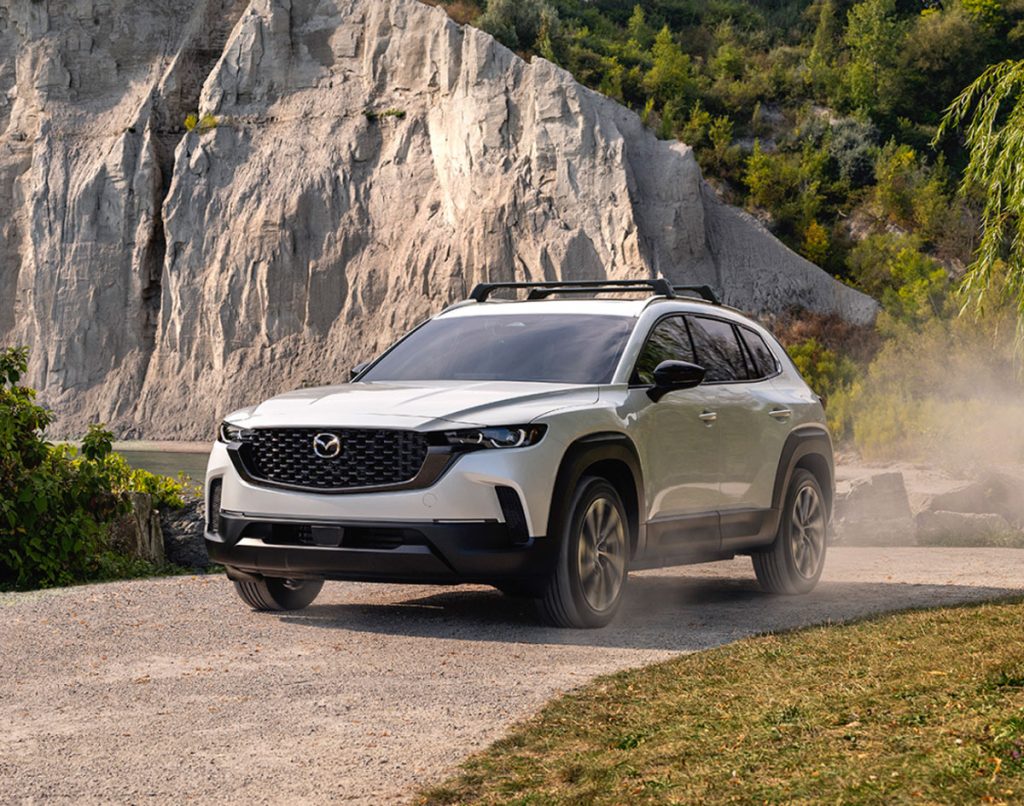
Understanding how the Mazda CX-50 Hybrid works requires looking at how its powertrain responds in real conditions, how it manages energy, and how it supports daily routines behind the wheel.
How the Mazda CX-50 Hybrid Powertrain Delivers Daily Performance
Many drivers want to know whether the Mazda CX-50 Hybrid will feel responsive in everyday driving or if efficiency comes at the cost of performance. The Mazda CX-50 Hybrid powertrain combines a gasoline engine with an electric motor, allowing the vehicle to deliver power in a different way than a traditional engine.
At lower speeds, the electric motor provides immediate torque. This means the vehicle responds quickly when accelerating from a stop, without the delay that can occur in a gasoline-only engine. As speed increases, the gasoline engine works alongside the electric system to maintain consistent power.
This blended system creates a driving experience that feels smooth and controlled:
- Initial acceleration is more immediate and linear
- Power delivery remains consistent during city driving
- Transitions between electric and gasoline operation are subtle
Rather than focusing on peak horsepower, the Mazda CX-50 Hybrid emphasizes how the vehicle responds to real inputs, making daily driving feel more natural and predictable.
Why Hybrid Efficiency Changes in Real Island Driving Conditions
What kind of fuel economy can drivers realistically expect from the Mazda CX-50 Hybrid? The answer depends on how and where the vehicle is driven.
Hybrid systems are designed to take advantage of conditions that are common in Honolulu. At lower speeds and during stop-and-go traffic, the Mazda CX-50 Hybrid uses its electric motor more frequently. It also captures energy through regenerative braking, which converts braking force into stored energy for later use.
These behaviors mean that efficiency improves in situations where traditional engines are least efficient:
- Stop-and-go traffic allows the hybrid system to rely more on electric power
- Short trips benefit from reduced fuel usage during low-speed driving
- Regenerative braking helps recover energy that would otherwise be lost
On longer highway drives, the gasoline engine plays a larger role, but the hybrid system still supports efficiency by reducing engine load where possible.
How the Mazda CX-50 Hybrid e-AWD System Supports Traction
Does the Mazda CX-50 Hybrid AWD system actually improve traction in daily driving? The Mazda CX-50 Hybrid e-AWD system uses electric motor assistance to manage power distribution between the front and rear wheels.
Unlike traditional mechanical AWD systems, which rely on driveshaft connections and delayed engagement, the hybrid system can adjust torque more quickly because it is electronically controlled. This allows the vehicle to respond faster to changing conditions.
In real-world driving, this creates measurable benefits:
- During rain, power is adjusted instantly to maintain grip
- On inclines, torque distribution helps prevent wheel slip
- When accelerating from a stop, traction remains consistent across surfaces
For drivers navigating wet roads or varying elevations, the Mazda CX-50 Hybrid e-AWD system contributes to stability without requiring driver input.
What Driving Range and Refueling Expectations Actually Mean
How far can the Mazda CX-50 Hybrid go between fill-ups, and what does that mean for daily use? Driving range is influenced by both fuel efficiency and how the hybrid system manages energy.
Because the Mazda CX-50 Hybrid reduces fuel consumption during low-speed driving, it can extend the time between refueling compared to a gasoline-only model. However, range is not just about distance. It reflects how often drivers need to think about fuel at all.
In daily driving, this translates to:
- Fewer trips to refuel during regular commuting
- More consistent fuel usage across different driving conditions
- Less impact from traffic patterns on overall efficiency
Rather than focusing only on MPG figures, understanding range in terms of routine helps clarify how the vehicle fits into everyday life.
How to Decide Whether the Mazda CX-50 Hybrid Fits Your Routine
Is the Mazda CX-50 Hybrid the better choice over a gasoline CX-50? The answer depends on how the vehicle will be used on a daily basis.
Drivers who spend more time in traffic, take shorter trips, or want to reduce fuel consumption in daily driving will benefit most from the hybrid system. The Mazda CX-50 Hybrid is designed to take advantage of those conditions and turn them into efficiency gains.
Drivers who prioritize consistent highway driving or prefer a traditional engine feel may find the gasoline CX-50 aligns more closely with their expectations.
When comparing the two, consider:
- How often you drive in stop-and-go traffic
- The average length of your daily trips
- Whether reducing fuel stops is a priority
- How important smooth, low-speed responsiveness is to your driving experience
The Mazda CX-50 Hybrid does not replace the driving experience. It reshapes it to better match the rhythm of daily driving, especially in environments where conditions change throughout the day.
Connect with us


- July 2026
- June 2026
- May 2026
- April 2026
- May 2024
- March 2024
- February 2024
- December 2023
- November 2023
- October 2023
- September 2023
- August 2023
- July 2023
- June 2023
- May 2023
- April 2023
- March 2023
- February 2023
- January 2023
- December 2022
- November 2022
- October 2022
- September 2022
- August 2022
- July 2022
- June 2022
- May 2022
- April 2022
- March 2022
- February 2022
- January 2022