Blog / Honolulu Mazda Dealer

Blog

All Honolulu Mazda Dealer Blog Honolulu Mazda Service Cutter Mazda Honolulu Service

Mazda CX-50 vs CX-5: How Their Driving Experience Actually Differs

The Mazda CX-5 and Mazda CX-50 are often compared because they sit close together in Mazda’s SUV lineup, but they are engineered with different intentions. Both are built around Mazda’s core philosophy of connection between driver and vehicle, yet the way they achieve that connection feels distinct once you are behind the wheel. For drivers, the question is not simply which one is better. It is how each vehicle responds to the road, how it absorbs imperfections, and how it supports different types of driving. Understanding those differences requires looking beyond features and into how each SUV is designed to move. How the Mazda CX-5 and CX-50 Are Engineered for Different Driving Feel Many shoppers researching the Mazda CX-50 vs CX-5 ask what the real difference is in how they drive. The answer begins with how each vehicle is tuned and positioned. The Mazda CX-5 is engineered with a focus on balanced on-road refinement. Its suspension tuning prioritizes smoothness, controlled body movement, and a quiet cabin experience. Steering input feels precise but relaxed, allowing the vehicle to settle into corners without feeling overly rigid. The Mazda CX-50 is designed with a more grounded and planted feel. Its chassis and suspension are tuned to handle a wider range of surfaces, including uneven terrain. Steering response is slightly firmer, and the vehicle maintains a more connected feel to the road surface. This difference is not about one being better than the other. It reflects two different approaches to driving: The Mazda CX-5 emphasizes composure and fluid motion on paved roads The Mazda CX-50 emphasizes stability and confidence across varied surfaces These engineering decisions shape how each vehicle responds during everyday driving. Suspension, Tires, and Ride Quality Differences Why does the Mazda CX-50 feel more rugged, and why does the Mazda CX-5 feel smoother? The answer comes down to physical components like suspension tuning, tire design, and ride height. The Mazda CX-5 uses a suspension setup that prioritizes absorbing small road imperfections. This creates a smoother ride over uneven pavement and reduces the amount of vibration felt inside the cabin. Tire sidewalls and wheel configurations are also tuned to support comfort and quiet operation. The Mazda CX-50 takes a different approach. It uses a slightly higher ride height and tire configurations designed to handle a broader range of surfaces. Tires with more sidewall flexibility can better absorb impacts from uneven terrain, but they also transmit more road texture to the driver. These differences influence how each vehicle behaves: The Mazda CX-5 reduces road feedback for a quieter, more relaxed ride The Mazda CX-50 allows more road feedback to improve control on uneven surfaces The Mazda CX-50’s increased ground clearance supports light off-road driving The Mazda CX-5 remains more composed on consistently paved roads For drivers who spend most of their time on city streets and highways, the CX-5’s smoother ride often feels more natural. For those who encounter mixed terrain, the CX-50’s setup provides added confidence. Driving Position and Driver Control Perception How does seating position change the way each vehicle feels to drive? The Mazda CX-5 and Mazda CX-50 approach driver positioning differently, and that difference affects perception and control. The Mazda CX-5 places the driver in a slightly more traditional SUV seating position. The cabin layout is designed to feel centered and balanced, with clear forward visibility and a sense of being integrated into the vehicle. This positioning supports relaxed driving and predictable control. The Mazda CX-50 positions the driver slightly lower and more horizontally aligned with the vehicle’s structure. This creates a more grounded feeling, similar to what drivers experience in vehicles designed for varied terrain. The result is a stronger sense of connection to the road surface. These differences influence driver confidence in subtle ways: The Mazda CX-5 supports ease of use and comfort in daily driving The Mazda CX-50 enhances awareness of terrain and vehicle positioning The Mazda CX-50’s layout can feel more engaging in less predictable conditions Driver perception plays a significant role in how a vehicle feels, even when performance specifications are similar. How Each SUV Performs in Real-World Driving Scenarios Which Mazda SUV performs better depends on where and how it is driven. Instead of focusing on specifications alone, it helps to look at how each vehicle behaves in common driving situations. In city environments with consistent pavement, the Mazda CX-5 delivers a smoother and quieter experience. Its suspension absorbs road imperfections, and its steering remains predictable in stop-and-go traffic. On highways, both vehicles perform confidently, but the CX-5 maintains a slightly more refined ride over long distances. Cabin isolation and smooth power delivery make it well suited for extended driving. In mixed conditions, including gravel roads or uneven surfaces, the Mazda CX-50 begins to show its advantages. Its suspension and tire setup allow it to maintain stability, while its ground clearance helps prevent contact with uneven terrain. For drivers who move between different types of roads, the CX-50 offers versatility. For those who primarily stay on paved surfaces, the CX-5 provides a more relaxed and composed experience. How to Choose Between Mazda CX-5 and CX-50 Based on Driving Priorities Which Mazda SUV should you choose ultimately comes down to how you drive and what you expect from the vehicle. If your driving is centered around commuting, city traffic, and highway travel, the Mazda CX-5 offers a refined experience that prioritizes comfort and smoothness. It is designed to make everyday driving feel controlled and effortless. If your driving includes varied terrain, outdoor travel, or conditions where road surfaces are less predictable, the Mazda CX-50 provides a more adaptable setup. Its design supports stability and control when conditions change. When deciding between the two, consider: The type of roads you drive most often Whether comfort or terrain capability is a higher priority How much road feedback you prefer while driving Whether your driving conditions change frequently Both vehicles reflect Mazda’s focus on driver connection, but they express that philosophy in different ways. The CX-5 refines the experience of everyday driving, while the CX-50 expands it into a broader range of environments.
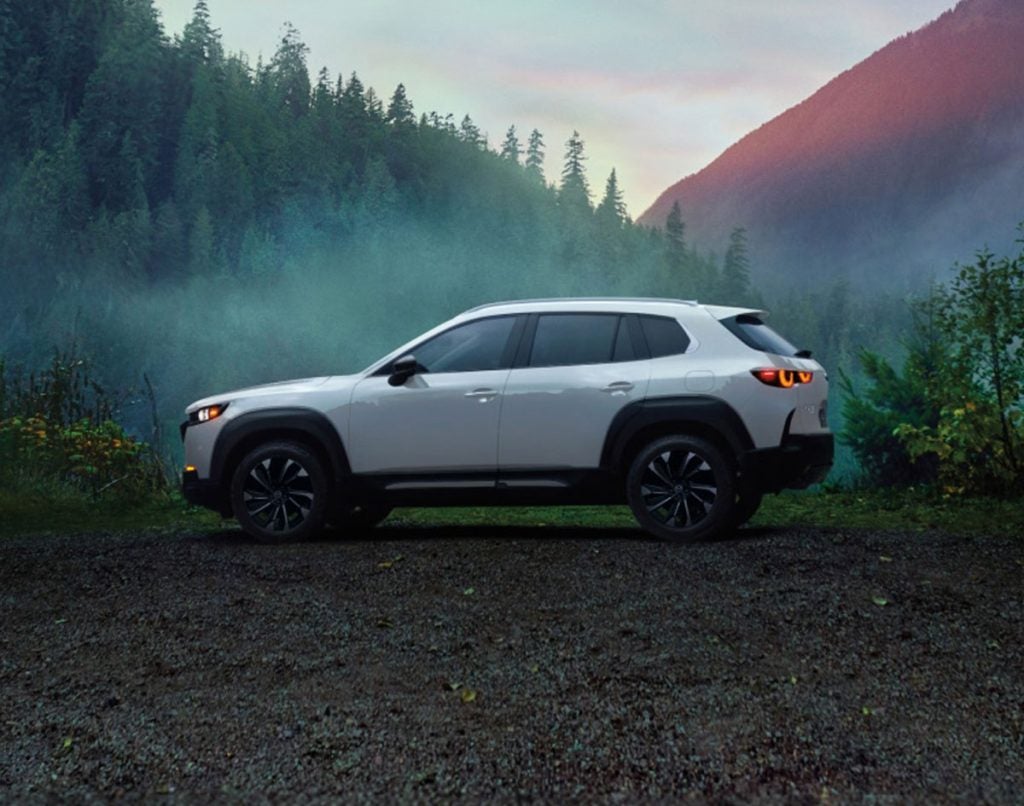

2026 Mazda CX-5 Trim Differences Explained for Honolulu Drivers

The 2026 Mazda CX-5 is built around a philosophy that prioritizes connection between driver and machine. Mazda refers to this as Jinba Ittai, the idea that the vehicle should respond as naturally as the human body. That philosophy doesn’t just influence steering or handling. It shapes how each trim level is designed, how materials are selected, and how the vehicle supports everyday driving. For Honolulu drivers, choosing between Mazda CX-5 trims is not just about features or pricing. It is about understanding how each configuration responds to real conditions like rain, elevation changes, stop and go traffic, and longer coastal drives. The differences between trims become clearer when you look at how each one changes the driving experience, not just what it includes. Understanding Mazda CX-5 Trim Levels and What Changes Between Them Many shoppers ask what the actual differences are between Mazda CX-5 trims and whether moving up the lineup is worth it. The answer starts with how Mazda structures its trims. The 2026 Mazda CX-5 trim lineup progresses in layers. Entry trims establish the core driving experience with standard all wheel drive, essential safety systems, and a balanced interior design. As you move into mid level trims, the focus shifts toward refinement, including upgraded materials, enhanced seating comfort, and expanded driver assistance features. Higher trims introduce more advanced technology and performance enhancements, including the turbocharged engine. What makes the CX-5 different from many competitors is that each trim does not feel like a separate vehicle. Instead, each level builds on the same foundation while refining how the vehicle feels to drive and interact with. When comparing trims, the most important differences typically fall into these categories: Interior materials and seating design Infotainment size, responsiveness, and interface features Advanced driver assistance systems Engine performance options Exterior lighting and design elements Understanding these categories helps shift the focus from simply choosing features to choosing how the vehicle will feel over time. How the 2026 Mazda CX-5 i-Activ AWD System Supports Island Driving Does every Mazda CX-5 come with all wheel drive, and does it actually matter in a place like Honolulu? The 2026 Mazda CX-5 i-Activ AWD system is standard across all trims, and it plays a more active role in driving than many shoppers expect. i-Activ AWD is a predictive system. Instead of waiting for wheels to slip, it continuously monitors data such as throttle input, steering angle, outside temperature, and road conditions. It then adjusts how power is distributed between the front and rear wheels before traction is lost. In everyday Honolulu driving, this system supports stability in ways that are often subtle but important: During sudden rain, traction is maintained without noticeable delay On hills and elevation changes, power is balanced to prevent slipping When accelerating from a stop on wet roads, the vehicle remains controlled Because this system is standard on every 2026 Mazda CX-5, shoppers do not need to choose a higher trim to access it. Instead, AWD becomes part of the baseline driving experience, allowing trim decisions to focus on performance and refinement. Engine Options and How Turbocharging Changes Performance Is the turbocharged Mazda CX-5 engine worth it for daily driving? The difference between the standard and turbocharged engines is best understood through how each delivers power. The 2026 Mazda CX-5 naturally aspirated engine produces power in a linear and predictable way. As you press the accelerator, the engine builds speed gradually. This creates a smooth driving experience that works well for city traffic and steady cruising. The 2026 Mazda CX-5 turbocharged engine changes that behavior by increasing torque at lower speeds. A turbocharger uses exhaust gases to spin a turbine, which forces more air into the engine. This allows the engine to produce more power earlier in the acceleration process. In real world driving, that translates to: Faster response when merging onto highways Less effort required when climbing hills More immediate acceleration when passing slower vehicles For drivers navigating elevation changes or looking for more responsive acceleration, the turbocharged CX-5 provides a noticeable difference in how the vehicle feels under load. Interior Design and Technology Differences Across CX-5 Trims What changes inside the Mazda CX-5 as you move through the trims? The interior is one of the most significant areas where trim levels make a difference in long term ownership. Mazda approaches interior design with a focus on simplicity, material quality, and driver focus. Lower trims provide durable materials and a clean layout that prioritizes ease of use. As you move into higher trims, the cabin becomes more refined through upgraded surfaces, improved seating materials, and additional comfort features. Technology also evolves across the lineup. While core infotainment functionality remains consistent, higher trims introduce enhancements that improve interaction and convenience. These differences typically include: Larger infotainment displays with improved clarity Enhanced audio systems for more balanced sound Additional driver assistance features for highway and traffic conditions Seating upgrades that improve long drive comfort The key difference is not just what features are added, but how those features improve daily interaction with the vehicle. Over time, these refinements can significantly influence comfort and satisfaction. How to Choose the Right Mazda CX-5 Trim Based on Available Inventory Which Mazda CX-5 trim is the best choice depends not just on features, but on what is currently available and how those trims align with your driving needs. Based on current inventory, the 2026 Mazda CX-5 lineup is centered around the 2.5 S configurations, each offering a different balance of comfort, technology, and refinement while maintaining the same core driving dynamics and standard i-Activ AWD system. The Mazda CX-5 2.5 S AWD serves as the foundation. It delivers the essential Mazda driving experience with standard all wheel drive, core safety systems, and a clean, driver-focused interior. For drivers who prioritize simplicity and capability without added complexity, this trim covers the fundamentals. Moving up, the Mazda CX-5 2.5 S Select AWD introduces refinements that improve everyday usability. Interior materials become more durable and visually refined, while convenience features begin to enhance how the vehicle fits into daily routines. This trim is often where the CX-5 starts to feel more tailored rather than purely functional. The Mazda CX-5 2.5 S Preferred AWD shifts further into comfort. Seating materials are upgraded, and features that support longer drives become more noticeable. For Honolulu drivers who spend more time commuting or navigating varying road conditions, this trim begins to emphasize comfort over simplicity. The Mazda CX-5 2.5 S Premium AWD builds on that foundation with additional technology and interior enhancements. Driver interaction improves through upgraded infotainment features and more advanced systems that support awareness and convenience. This trim is designed for drivers who want a more connected and refined experience without stepping into performance upgrades. At the top of the available inventory, the Mazda CX-5 2.5 S Premium Plus AWD represents the most refined version of the naturally aspirated CX-5. Interior materials, driver assistance features, and overall cabin experience are elevated to create a more complete and polished driving environment. When comparing these trims, the decision becomes less about capability, since all include AWD, and more about how much refinement you want in your daily drive: Choose the 2.5 S AWD or Select AWD if you want a straightforward, capable SUV with essential features Choose the Preferred AWD if comfort and upgraded materials matter for daily driving Choose the Premium or Premium Plus AWD if you want the most advanced technology and interior refinement available in this lineup Because all available trims share the same core engineering and AWD system, every option maintains the same balanced handling and predictable performance. The difference is how much the vehicle enhances your comfort, interaction, and overall driving experience over time.nt, performance, and technology you want supporting that experience.

Contact Us

Fill out this form below and we'll contact you shortly
*Required Fields