Blog / Honolulu Mazda Dealer

Mazda CX-5 vs CX-30: Which Size Category Fits Oʻahu

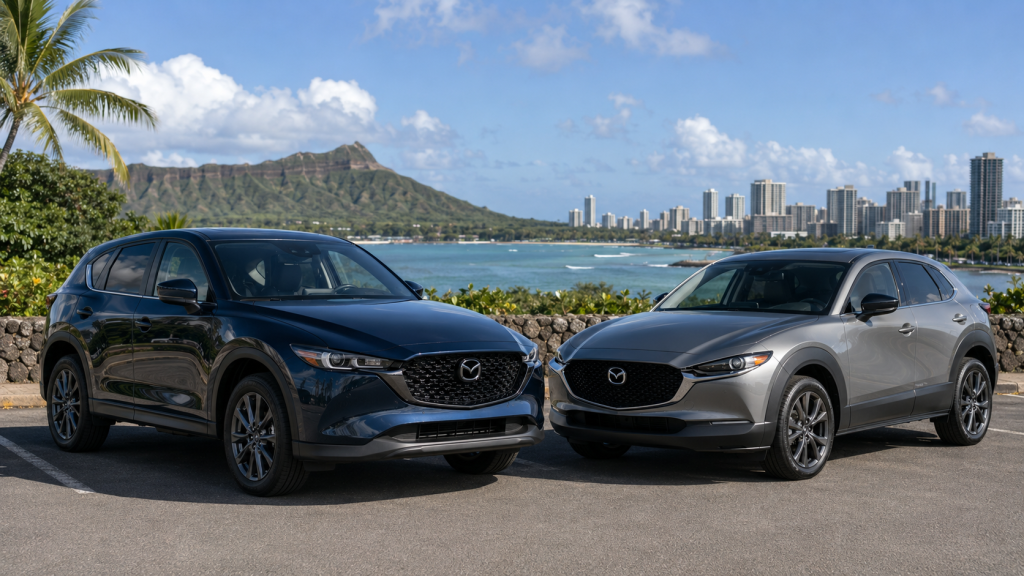
The Mazda CX-5 and CX-30 share a design language and a platform philosophy, but choosing between them comes down to one practical question: how much space do you actually use on a typical Oʻahu drive? Both SUVs are built around the same Kodo design principles and deliver the same driver-focused character. However, they occupy different size classes, and those classes carry real differences in interior volume, cargo geometry, and how each model moves through city streets and tight parking structures. Understanding what separates them helps shoppers avoid choosing more vehicle than they need, or less than they expected. 

How Much Bigger Is the CX-5 Compared to the CX-30? 

The CX-5 is a compact SUV. The CX-30 is a subcompact crossover. Those labels are not marketing categories. They reflect EPA vehicle classification standards based on interior passenger and cargo volume. The CX-5 clears the threshold for compact SUV classification because its combined interior volume is large enough to qualify. The CX-30 falls below that threshold, which places it in the subcompact crossover category alongside smaller alternatives from other brands. 

In practical terms, the CX-5 is approximately 6.5 inches longer overall than the CX-30. It also sits about 4.4 inches taller. The wheelbase, which is the distance between the front and rear axles, is roughly 4 inches longer on the CX-5. Each of those measurements has downstream effects on interior space, cargo capacity, and how the vehicle behaves in confined areas. The CX-5 is wider as well, which affects both shoulder room inside the cabin and the width of the footprint the driver manages in parking garages and narrow lanes. For shoppers who have not sat in both vehicles, the size difference is more noticeable than the numbers suggest. 

Neither model offers a third row. Both are strictly two-row vehicles. The decision between them is not about seating count. It is about how much room each row provides and how much cargo volume sits behind it. 

Cargo Space and What the Numbers Actually Tell You 

The CX-5 offers approximately 30.9 cubic feet of cargo space behind the rear seats. The CX-30 provides approximately 20.2 cubic feet in the same configuration. That is a difference of roughly 10 cubic feet, which sounds significant in isolation. However, raw cubic footage does not fully describe the usable space inside either model. The shape of the cargo floor, the width of the load opening, and the slope from the rear seatback to the cargo floor all affect what a driver can realistically load and unload. The following points describe the cargo geometry difference between the two models: 

  • The CX-5 has a wider cargo opening and a flatter load floor behind the rear seats. Larger, flat items such as surfboard bags, coolers, or stroller frames load more easily because the floor does not slope sharply and the opening does not narrow quickly toward the center. 
  • The CX-30's cargo floor is narrower and sits at a slightly different angle relative to the rear seat. It suits smaller, more frequent loads well, including grocery bags, backpacks, and beach gear for two people. It becomes limiting when the load is wide, long, or requires a flat surface. 
  • With rear seats folded flat, the CX-5 expands to approximately 59.3 cubic feet of total cargo volume. The CX-30 reaches approximately 45.1 cubic feet. For buyers who carry large items occasionally, that folded-flat difference is the more meaningful comparison point. 

Rear Seat Comfort and How the Roofline Affects Passengers 

The CX-5's taller overall height translates directly into rear seat headroom. Adult passengers sitting in the second row of the CX-5 have more clearance above their heads than they do in the CX-30. The CX-30's lower roofline compresses the interior height in the rear seating area, which affects taller passengers most noticeably. Rear legroom is comparable between models, so the primary comfort variable in the back seat is vertical clearance, not fore-and-aft space. 

For families with children in car seats, the CX-30 handles the task without issue. Children in forward-facing or rear-facing seats do not require the same headroom that adult passengers do, and the CX-30's rear seat width accommodates standard car seat bases comfortably. The distinction becomes relevant when the rear passengers are adults riding any meaningful distance. For regular Oʻahu commutes with adult rear passengers, the CX-5's additional headroom makes the back seat noticeably more comfortable over time. 

Front seat space is generous in both models. Mazda's seat design in both the CX-5 and CX-30 prioritizes lateral support and long-distance comfort, and neither cabin feels cramped in the first row. The difference in interior experience is concentrated in the rear, and that difference is driven almost entirely by the roofline height gap between the two platforms. 

How Each Model Handles Urban Driving and Tight Spaces 

A shorter wheelbase reduces the turning radius. The CX-30's wheelbase advantage over the CX-5 translates into a tighter turning circle, which matters in multi-level parking garages, narrow residential streets, and the kind of dense urban grid found in downtown Honolulu. Drivers who navigate tight spaces frequently will notice the difference in low-speed maneuverability. The CX-30 changes direction more quickly at parking lot speeds and requires less forward-backward correction when backing into stalls. The following points connect the dimensional differences to daily urban driving: 

  • The CX-30's shorter overall length makes parallel parking and angled stall parking more straightforward in compact urban spaces. A vehicle that is 6.5 inches shorter occupies meaningfully less linear space in a stall and gives the driver more margin in tight entry and exit situations. 
  • The CX-5's wider track and longer wheelbase give it more planted, stable highway behavior. On longer drives across the island or during highway sections of the H-1, the CX-5 feels more settled at speed. The additional weight and width work in its favor at sustained freeway pace. 

Which Mazda SUV Fits Oʻahu Roads More Naturally? 

Oʻahu's driving environment rewards right-sized vehicles. Parking in Kakaʻako, navigating the streets near the University of Hawaiʻi, or finding a stall at a beach access point puts a premium on a compact footprint. At the same time, many Oʻahu families use their SUV for weekend beach trips, trail access, and occasional hauls that benefit from a larger cargo area. The right answer depends on which of those use cases shows up more often. 

For solo drivers, couples, or small families who spend most of their time in Honolulu's urban core, the CX-30 is a better fit. It is easier to park, nimbler at low speeds, and provides enough cargo room for the grocery runs, beach days, and weekend errands that define most daily routines on the island. For families who regularly carry three or four adults, haul larger gear, or want rear seat comfort for longer drives across the island, the CX-5 justifies its larger footprint. Both models are available at Cutter Honolulu Mazda, and sitting in each one back to back is the clearest way to understand where the size difference actually shows up for your specific daily pattern. 
Posted in:

Related Posts

mazda3 hatchback daily driving

Mazda3 Hatchback Daily Driving in Honolulu Made Simple

Mazda3 Hatchback daily driving in Honolulu can combine compact dimensions, adaptable cargo access, and responsive road manners. In addition, that mix matters when your week includes commuting, errands, passengers, and tight parking. Furthermore, the five door shape gives you a wide rear opening without moving into a taller crossover. Because the cabin sits lower, the car also keeps a close connection to the road. Therefore, the key question is not whether a hatchback can do everything. It is whether its size and layout fit the way you move through Honolulu. Why the Hatchback Body Shape Changes Cargo Access A hatchback uses a rear door that lifts with the glass. That creates a taller opening than a conventional trunk lid. Because the opening extends upward, boxes and bulky items can pass through with fewer angle changes. In addition, the cargo floor sits close to the opening, which makes loading feel direct. How does that shape change Mazda3 Hatchback daily driving during a normal errand? Think about grocery bags, beach chairs, folded strollers, small coolers, or luggage. However, these items may fit within the published cargo volume, yet opening shape still controls how easily they enter. Therefore, the hatch itself deserves attention during a showroom visit. more The rear seatbacks add another layer of choice. Mazda uses a split folding design, so you can lower one side while leaving seating on the other. That can work well when one rear passenger rides with a longer item. In addition, the wider opening makes it easier to slide that item into place. With that in mind, bring your routine into the evaluation before deciding that cargo space is enough. Consider what you carry most weeks, instead of rare large loads. A hatchback can feel roomy for one household and tight for another. The shape of your gear matters just as much as the published volume. Is the Mazda3 Hatchback Easy to Park in Honolulu? Its compact length and turning diameter support tighter low speed maneuvering. The Mazda3 Hatchback measures 175.6 inches long, which keeps the body relatively short for a five door car. That footprint can be useful in crowded lots, neighborhood streets, and parking structures around Honolulu. Mazda3 Hatchback daily driving also involves how clearly you can judge the car's corners. The low hood and compact body make the front end easier to place. However, the rear pillars are broad, so rearward sightlines deserve a careful test. A backup camera can support that view, but you should still check mirrors and shoulder visibility. What should you test during a parking maneuver? Start with a normal space, then try a tighter one. Notice how much steering input you need and how quickly the car pivots. In addition, check whether the rear glass gives you enough visual context when reversing. In addition, the hatchback's lower height changes how you perceive nearby vehicles. You sit closer to sedan height than crossover height. Because of that seating position, sightlines may feel different if you are used to an SUV. A short test drive can tell you whether that view feels natural. How Much Can the Mazda3 Hatchback Carry? Cargo fit comes from both available volume and the shape of the rear opening. The Mazda3 Hatchback provides 20.1 cubic feet behind the rear seats. With the rear seat folded, published measurements reach 47.1 cubic feet. However, those numbers give useful scale, but they do not describe every loading situation. Mazda3 Hatchback daily driving can include mixed passenger and cargo needs. A split rear seat lets you adjust the cabin around the load. Before lowering both sides, consider whether only one section is needed. That preserves seating for a passenger while opening more length for gear. A few loading checks can make the decision easier: Place a medium suitcase or storage bin near the hatch opening. This shows whether the opening height works with your common items. Fold one rear seat section and check the floor transition. This shows how longer items will sit across the rear area. Sit in the remaining rear seat after folding the other side. This confirms whether passenger room still works for your routine. Because the hatch opening is part of the rear body, loading also changes how you use curbside space. You need room behind the car for the hatch to rise. Therefore, a tight wall or another parked car can limit access even when the cargo area itself is large enough. How Mazda Driving Traits Fit Honolulu Roads The Mazda3 Hatchback uses G Vectoring Control Plus to make small adjustments during steering input. The goal is smoother weight transfer as the car turns. You may notice that as a more settled path through curves and lane changes. The correction works in the background, so the steering can feel natural instead of busy. How does Mazda3 Hatchback daily driving feel during a normal commute? Honolulu roads can combine stop and go traffic, short merges, and frequent turns. A compact car with clear steering feedback can make lane placement easier. In addition, the lower body gives the Mazda3 Hatchback a connected feel through corners. By contrast, the available 2.5 Turbo changes acceleration more than the basic shape of the car. Its stronger low rpm torque can make merging and passing feel quicker. That matters when you need speed without holding the throttle open for long. The turbo model also pairs with i Activ AWD, which monitors wheel speed and other inputs while distributing power. Shoppers should decide whether they value that stronger response enough to choose the turbo trim. The standard engine may already suit calmer commuting. Therefore, the test drive should include the same roads you use each week. Try a merge, a hill, a slow turn, and a short passing zone if possible. What to Evaluate During a Mazda3 Hatchback Test Drive Mazda3 Hatchback daily driving should feel natural before you commit. A useful test drive should copy your normal routine as closely as possible. Do not judge the Mazda3 Hatchback from one straight road. Include parking, a tighter turn, moderate traffic, and a short highway section if available. That gives you a clearer view of how the car fits daily travel. Start with seating position and visibility. Adjust the seat and mirrors before moving. Then check the rear pillars during shoulder checks and reversing. If rear sightlines feel limited, see whether the mirrors and camera give you enough information. Next, test the cargo area with the kind of items you carry. You do not need a full trunk load. One suitcase, stroller, cooler, or storage bin can reveal a lot about opening size and floor height. You can also use a short checklist during the drive: Check whether the steering feels easy to place in narrow lanes and parking areas. Pay attention to how quickly the car responds. Sit in the rear seat after setting the front seat for yourself. This gives you a more realistic view of passenger room. Open the hatch in a normal parking space. Confirm that you have enough room behind the car to load comfortably. Mazda3 Hatchback daily driving in Honolulu works best when the car matches your routine, not an abstract category. The compact footprint, hatch opening, rear seat layout, and road feel each answer a different need. Spend time with those details before deciding. When the fit is right, the hatchback can handle a wide mix of city trips without feeling oversized.

Mazda CX-30 Daily Driving Guide for Honolulu Roads

Mazda CX-30 daily driving starts with parking, seating, visibility, passenger space, and cargo needs. Honolulu roads can include tight garages, busy lanes, steep streets, and short trips. Therefore, each detail deserves a closer look before choosing this compact crossover. The CX-30 measures 173 inches long and 70.7 inches wide. Those dimensions place it between a small hatchback and a larger SUV. Because size shapes every trip, drivers should test the CX-30 where they park and travel most. Compact Size for Honolulu Parking Exterior size shapes how easily a vehicle moves through garages, narrow lanes, and crowded parking areas. The CX-30 uses a compact footprint that can suit many Honolulu routes. Its 173 inch length leaves less body behind the rear axle than larger SUVs. Therefore, the rear end follows more closely during slow turns. That trait can make tight parking moves easier to judge. more Width matters when spaces sit close together. The CX-30 measures 70.7 inches wide without mirrors. In addition, its doors still need enough room for passengers to enter comfortably. Before deciding, test these parking tasks: Enter a space between two vehicles and check door clearance on both sides. Reverse from a busy row while watching mirrors, windows, and dashboard alerts. Turn through a garage ramp and note how closely each wheel tracks the curb. Mazda CX-30 daily driving can feel easier when low speed steering supports careful placement. Still, drivers should not rely on steering feel alone. Mirror setup and seat position remain just as important. Comfort During Repeated Honolulu Trips Mazda CX-30 daily driving comfort begins with the driver’s seat, pedal reach, and steering wheel position. The CX-30 places major controls within easy reach from the front seats. First, adjust the seat before judging cabin space. Your hips should remain supported while your knees stay slightly bent. Then adjust the wheel so both hands rest comfortably without leaning forward. The front seats use firm cushioning and shaped side support. Therefore, posture may feel more secure during frequent turns. That firmness may also feel different from softer seating in other crossovers. Honolulu trips may involve short drives with repeated stops. Because of that pattern, easy entry and quick control access matter. Drivers should test the seat after several exits and returns. Climate control placement also deserves attention. The CX-30 uses physical controls for key cabin settings. Furthermore, the center display sits high on the dashboard for easier viewing. A calm cabin layout can reduce distraction during crowded travel. Even so, every driver should test the controls while parked. Familiarity matters before traffic begins moving. Visibility Around Traffic and Parking Areas Mazda CX-30 daily driving visibility covers what you see through the glass, mirrors, and available camera views. The CX-30 provides a raised seating position than a low car. Forward sightlines feel open from a properly adjusted seat. However, the rear roofline and rear pillars can narrow the view behind the vehicle. Therefore, drivers should test every viewing angle. Blind Spot Monitoring and Rear Cross Traffic Alert support side and rear awareness. These features can warn about nearby traffic that enters a monitored area. Still, direct mirror and shoulder checks remain necessary. Some trims add parking sensors or a 360 degree monitor. Those tools can support low speed spacing around curbs and nearby vehicles. Because equipment varies, confirm the exact trim before purchase. During a test drive, check these views: Look over each shoulder while parked and note how much glass remains visible. Reverse into a space and compare the camera image with your mirror view. Change lanes safely and observe when the blind spot alert appears. Bright sun and heavy rain can change what cameras and mirrors show. Therefore, drivers should keep lenses and glass clean. Clear surfaces support better awareness during repeated trips. Passenger Space Behind the Front Seats Mazda CX-30 daily driving fit also depends on rear seat space and passenger height. The CX-30 can carry five people, but the rear row suits some groups better. Set the front seat for the regular driver first. Then sit behind that position and check knee, foot, and head room. This step gives a more useful answer than published measurements alone. Adults with longer legs may find the rear row tighter. By contrast, children or shorter adults may fit comfortably for local trips. The result depends on who rides there most. Child seats require another check. Bring the exact seat during the dealership visit when possible. Furthermore, install it behind the intended front passenger position. Check whether the front passenger still has enough knee room. Also test the rear door opening and buckle access. These details shape repeated loading more than seat counts do. For households with regular rear passengers, take a longer test drive. Because ten minutes may hide pressure points, spend more time in each seat. Swap positions before making a final choice. Cargo Room for Errands and Weekend Plans Mazda CX-30 daily driving cargo checks should cover floor area, hatch shape, and rear seat folding. Mazda lists 20.2 cubic feet behind the rear seats. With the rear seats folded, space increases to 45.2 cubic feet. Those figures provide a starting point. However, cubic feet cannot show how a stroller, cooler, or storage bin fits. Shape matters as much as total volume. The hatch opening narrows near the upper corners. Therefore, tall square items may need careful placement. The cargo floor works well for grocery bags, backpacks, and smaller equipment. The rear seat uses a split folding layout. Consequently, one side can fold while another passenger keeps a rear seat. That arrangement supports longer items without using the full cabin. Bring common cargo to the dealership when possible. Test grocery bins, sports bags, work cases, or a folded stroller. In addition, close the hatch after loading everything. Do not judge space with the hatch open. A sloped hatch may contact taller items near the rear edge. Therefore, the closing test matters before leaving the dealership. Test the CX-30 Against Your Routine A useful test drive should copy the trips you make most. Start with parking, then include stoplights, lane changes, hills, and rough pavement. Use your normal driving position from the beginning. Next, test mirror views, steering response, brake feel, and control reach. Moreover, listen for road noise at several speeds. Ask yourself whether the cabin supports repeated errands and commutes. Check how easily passengers enter and how quickly cargo loads. Then compare those results with your household needs. Before choosing a trim, confirm the included driver aids. Parking sensors and camera views may change across the lineup. Therefore, review the window sticker and feature list together. The Mazda CX-30 can fit Honolulu routines that favor compact size, front seat comfort, and flexible cargo space. Still, rear room and rearward visibility deserve a personal test. A careful drive will show whether its shape fits your roads, parking areas, and passengers.

What Honolulu Mazda Drivers Should Know About Trade In Value

Trade in value starts with an appraisal of your current car and its place in today’s local market. The visit also covers your loan payoff, available equity, and plans for your next Mazda. Knowing each step can make the conversation easier to follow. Therefore, preparation gives you clearer numbers before any paperwork begins. What Happens During the Appraisal A vehicle appraisal is a review of your car’s present condition and likely resale position. First, a team member records the year, trim, mileage, and equipment. Next, the car receives a visual inspection and a brief operational check. The inspection may cover tires, glass, lights, body panels, interior surfaces, and dashboard alerts. Service history, accident records, and title details may also enter the review. In addition, the appraiser may confirm included keys, manuals, and factory equipment. more What happens after the inspection? The dealership compares those findings with current sales data and local demand. That review supports an offer for the car as it sits today. A test drive may be part of the appraisal. Because sound and steering feel reveal details, a short drive adds useful context. The team may also inspect under the hood and around the cargo area. Therefore, leave personal items at home and make each area easy to reach. What Shapes Trade In Value Trade in value is the dealership’s offer for your current car. Mileage and condition receive close attention, yet they are only part of the calculation. Trim level, options, service records, title status, and current demand also enter the review. A clean car makes inspection easier, but major repairs before a visit may not repay their full cost. Instead, address simple items that limit access or hide the car’s condition. Remove trash, gather loose parts, and bring every key. Several details may shape the offer: Lower mileage may support a higher figure when other details remain similar. Complete service records may show that scheduled care received steady attention. Warning lights or worn tires may lower the offer because the dealership must plan for repairs. Local demand also matters. A vehicle that fits Oahu roads, parking needs, and current used inventory may draw stronger interest. By contrast, a rare trim may require more time to match with another owner. Online tools provide an early estimate from the details you enter. Still, the in person appraisal confirms the final offer. Physical wear, missing equipment, or an unreported repair can change the number. How Loan Payoff and Equity Work Equity is the difference between the appraisal offer and the lender’s current payoff amount. The payoff is the sum needed to close the existing loan on a stated date. It may differ from the balance shown on your last statement. Positive equity exists when the appraisal exceeds the payoff. For instance, a $20,000 offer with a $15,000 payoff leaves $5,000 in equity. That amount may enter the next transaction as trade proceeds. Negative equity exists when the payoff exceeds the appraisal. A $15,000 offer with an $18,000 payoff leaves a $3,000 difference. That remaining amount does not disappear when the car changes hands. The difference may be paid at the dealership or included in new financing, subject to approval. Including it increases the amount financed and the interest paid across the loan. Therefore, review that figure separately before discussing a monthly payment. Bring your lender’s name, account number, and a recent payoff quote when available. In addition, ask how long the quote remains valid. Daily interest may change the amount before the prior loan closes. How the Trade Connects With Your Next Mazda Trade proceeds become one part of the next Mazda calculation. The vehicle price, taxes, fees, cash down, rate, and term remain separate numbers. Keeping them separate makes the full agreement easier to read. Does a trade lower the next payment? Positive equity may reduce the amount financed. Still, the payment also reflects the selected Mazda, loan term, rate, and other charges. A longer term can lower the monthly figure while raising total interest. By contrast, a larger upfront amount can reduce the financed balance. Therefore, compare the full cost beside the monthly figure. Leasing follows a different contract structure, yet the same trade review still matters. Ask how trade proceeds enter the lease agreement. Also review the term, mileage limit, due at signing amount, and end of lease duties. Before choosing a new or preowned Mazda, request a written breakdown. It should separate the trade offer, payoff, equity, vehicle price, and financing terms. Clear separation prevents one number from hiding another. What Should You Bring to the Dealership? Trade in preparation means gathering vehicle, ownership, and lender information before arrival. A complete file may shorten the review and reduce follow up requests. Furthermore, it gives the dealership cleaner information for the appraisal. Bring the following items when they apply: Bring a valid driver’s license, current registration, and proof of insurance. Bring the title when you own the car without an active loan. Bring all keys, service records, lender details, and payoff information. Call ahead when another owner appears on the title or registration. Their signature or presence may be needed during the transaction. Also mention a lost title, name change, or out of state document before the visit. Remove personal items before arrival. Check the glove box, center console, cargo area, door pockets, and paired phone list. Additionally, save any garage codes or contact data that you need elsewhere. You do not need a flawless car to request an appraisal. Honest details help the team prepare for the review. Therefore, share known damage, warning lights, title notes, or recent repairs at the start. Review Every Number Before Moving Forward A clear review separates the current car from the next agreement. Start with the written trade offer. Then compare it with the lender payoff and confirm the resulting equity. Next, review the Mazda price before financing terms enter the discussion. After that, examine taxes, fees, cash down, rate, and term. This order makes each figure easier to trace. Ask these questions before signing: What is the written appraisal amount for my current car? What payoff amount will be sent to my current lender? Where does my positive or negative equity appear in the agreement? Furthermore, confirm how long the trade offer remains valid. Mileage changes, new damage, or market movement may lead to another review later. Trading a vehicle should feel understandable before it feels final. Clear figures, complete documents, and direct questions keep the visit focused. With that preparation, you can discuss your next Mazda with a stronger grasp of every number.