Blog

Top 10 Mistakes to Avoid as a First-Time Car Buyer

Key Takeaways:

  • First-time car buyers often make mistakes due to lack of experience and knowledge.
  • Research and budgeting are crucial steps to avoid overspending.
  • Inspecting and test-driving multiple cars helps in making an informed choice.
  • Understanding financing options and reading the fine print is vital.
  • Avoiding impulse purchases and seeking advice from experienced car buyers can prevent regrets.

Embarking on the journey of buying your first car is an exciting milestone in life. It's a symbol of freedom, convenience, and independence. However, navigating the car buying process as a first-time buyer can be challenging. There are countless options, decisions to make, and potential pitfalls to avoid. But fear not; we're here to guide you through this crucial phase of your life, ensuring you make informed choices and avoid common mistakes.

Ready to begin your car buying journey? Cutter Mazda Honolulu is here to help. Explore our range of vehicles and expert advice to make your first-time car buying experience a success.

Avoiding the Pitfalls of First-Time Car Buying

As a first-time car buyer, it's natural to feel overwhelmed. To help you stay on the right track, let's explore the most common mistakes first-time buyers make and how to avoid them.

Lack of Research

When it comes to research for your first car purchase, go beyond just checking out the latest models. Start by assessing your specific needs and budget. Are you a daily commuter, an adventurer who loves off-roading, or a family-oriented driver? Each lifestyle demands a different type of vehicle. Moreover, consider long-term costs like fuel efficiency, insurance rates, and maintenance expenses. Thorough research into these aspects will help you narrow down your options and make an informed decision that aligns with your lifestyle and financial situation.

Overspending

Overspending on your first car can lead to long-term financial challenges. To avoid this common mistake, establish a well-defined budget that covers all associated costs. Calculate not only the purchase price but also expenses like taxes, registration, insurance, and potential future repairs. Consider the total cost of ownership, including fuel and maintenance. A comprehensive budget will empower you to find a car that meets your financial capacity and lifestyle requirements without straining your finances.

Skipping Inspections

Skipping a comprehensive inspection can be a costly oversight. Even when purchasing from a reputable dealership, it's vital to have an independent mechanic inspect the vehicle. Their trained eye can uncover issues you might miss and objectively assess the car's condition. Relying solely on the seller's word can be risky. An inspection ensures you're buying a safe and reliable vehicle and offers valuable negotiation leverage if any issues are identified.

Not Test-Driving Enough

Test-driving is an essential part of the car buying process. Take your time during test drives and pay attention to key factors such as comfort, visibility, handling, and overall driving experience. Consider the specific driving conditions you'll encounter regularly: city traffic, highways, or rough terrain. Testing multiple cars allows you to make a meaningful comparison and choose a vehicle that best suits your needs and preferences.

Ignoring Financing Options

Understanding your financing options is paramount. Interest rates, loan terms, and monthly payments can vary significantly among lenders. To secure the best financing deal, shop around and don't hesitate to negotiate terms that align with your financial goals. Additionally, scrutinize the fine print to uncover any hidden fees or unfavorable conditions that could impact your long-term financial well-being. Making informed financing decisions can lead to substantial savings over the life of your car loan.

Impulse Purchases

The excitement of buying your first car can lead to impulsive decisions. To avoid buyer's remorse, resist the urge to make quick choices. Take time to reflect, compare different options, and even sleep on your decision if necessary. Seek advice from experienced car buyers or trusted friends and family who can provide valuable insights. Their guidance can help you make a well-thought-out decision that aligns with your needs and preferences while avoiding hasty purchases driven by emotions.

Failing to Negotiate

Negotiation skills can significantly impact your car buying experience. Dealerships often have room for negotiation in pricing, and private sellers may also be open to bargaining. Approach negotiations confidently, be prepared to make a counteroffer and consider asking for additional benefits such as extended warranties, complimentary maintenance, or accessory packages. Effective and respectful negotiation can result in substantial savings and added value to your purchase.

Not Reading the Fine Print

Navigating the paperwork involved in a car purchase can be overwhelming, but overlooking the fine print can lead to misunderstandings and unexpected expenses. Take the time to carefully read and comprehend all documents, especially the sales contract. Ensure you know all terms and conditions, warranty details, and additional costs or fees. Being diligent in reviewing the paperwork can prevent future disputes and financial surprises.

Skipping the Vehicle History Report

Whether you're buying from a dealership or a private seller, always request a comprehensive vehicle history report. This report provides vital insights into the car's past, including accidents, title status, and maintenance records. Skipping this step may leave you unaware of potential red flags affecting the car's reliability and overall value. A vehicle history report is crucial for making an informed and confident purchase.

Not Seeking Advice

Never underestimate the value of seeking advice when buying your first car. Tap into the knowledge and experiences of seasoned car buyers or consult online forums, reviews, and expert opinions. Learning from others can provide valuable insights, tips, and recommendations that help you navigate the car buying process more effectively. Don't hesitate to reach out to friends, family, or online communities for advice and guidance. Their collective wisdom can assist you in avoiding common pitfalls and making informed decisions throughout your first car buying journey.

A Smarter First-Time Car Buying Experience

As you embark on your journey as a first-time car buyer, remember that knowledge is your most potent tool. By avoiding these common mistakes and taking a patient, well-researched approach, you can make a confident and informed purchase decision. Cutter Mazda Honolulu is here to support you every step of the way, offering a wide selection of vehicles and expert advice to ensure your first car buying experience is a successful and enjoyable one.
Recommended Posts

Mazda Honolulu Service Questions Before Your Appointment

Mazda Honolulu Service Questions Before Your Appointment

Mazda Honolulu Service Questions Before Your Appointment Mazda Honolulu service appointments are easier to prepare for when you know which details to gather and questions to ask. Perhaps your Mazda needs routine maintenance, or an unfamiliar sound has caught your attention. Either way, preparing a few details before contacting the service department makes the discussion more productive. Additionally, knowing how diagnostics, estimates, and appointment updates work gives you a clearer view of the process. At Cutter Mazda Honolulu, a well-prepared visit begins with explaining what your vehicle needs. What Information to Gather Before Scheduling Mazda Service Before scheduling service, identify whether your Mazda needs routine maintenance or attention to a specific concern. Routine visits may involve work already listed in the vehicle's maintenance schedule. However, an unfamiliar noise, warning message, or unusual response may require diagnostic testing. What information should you have ready when contacting the service department? Start with your vehicle identification details and a description of the requested work. Additionally, gather any records that explain previous maintenance or repairs. The following information gives your service advisor a useful starting point: Vehicle identification and mileage: Have your Mazda's model, model year, current mileage, and vehicle identification number available. The VIN identifies the specific vehicle and supports accurate service record searches. Maintenance and repair history: Review recent service invoices and previous recommendations. These records show which components received attention and whether a concern has appeared before. Current concerns and warning messages: Record any unusual sounds, changes in operation, or dashboard messages. Note when they first appeared and whether they remain present. Your Mazda's instrument cluster may display maintenance notices or warning messages. However, a warning indicator does not always identify the exact component requiring attention. For this reason, record the complete message instead of guessing which repair is necessary. A photograph may preserve the wording and any accompanying indicators. Mazda owners can also review supported maintenance information through the MyMazda app. The app provides maintenance schedules and participating dealer service history for eligible vehicles. Before booking, check the owner's manual for instructions related to any active warning. Some warnings require immediate attention and should not wait for a routine appointment. Once you have gathered these details, explain the requested work when contacting Cutter Mazda Honolulu. This gives the service team information to review before your scheduled visit. How to Describe a Mazda Problem That Comes and Goes An intermittent problem may disappear before a technician examines the vehicle. A vibration might occur only during acceleration, while an unfamiliar sound may appear during a particular maneuver. Consequently, describing the circumstances surrounding the concern becomes an essential part of diagnostic preparation. How should you explain a problem that does not happen every time you drive? Describe what you noticed, when it occurred, and the vehicle's operation at that moment. Avoid assigning a mechanical cause unless a technician has already confirmed it. For instance, consider a Mazda that makes a clicking sound while turning. Simply reporting a clicking sound leaves several unanswered questions. Does it happen while stationary, during movement, or only when the steering wheel reaches a particular position? Those details guide the technician toward appropriate inspection and testing procedures. Similarly, a vibration during braking requires different investigation than a vibration during acceleration. The distinction may help the technician select suitable road tests and component inspections. Pay attention to whether the concern appears after starting the engine or following an extended drive. Additionally, record any dashboard indicators that accompany the symptom. A short recording may also capture a noise that disappears before the appointment. However, never attempt to record video while operating the vehicle. Ask a passenger to document the concern when doing so is safe. Modern Mazda vehicles contain electronic control modules that monitor various vehicle functions. Some faults may generate diagnostic trouble codes that technicians can retrieve using suitable equipment. Still, a stored code identifies a detected fault or operating irregularity, not necessarily the component requiring replacement. Technicians may need additional testing to isolate the underlying cause. Therefore, accurate observations from the driver remain useful even when electronic diagnostic information is available. If the concern cannot be reproduced, ask what was checked and what information would support further investigation. What to Ask About Diagnostics and Repair Estimates Scheduling a diagnostic appointment does not mean the repair has already been identified. Diagnosis involves investigating the reported concern through inspection, testing, and available vehicle information. A technician may begin by reviewing the symptoms and examining relevant components. Additionally, electronic diagnostic equipment may reveal stored fault codes or operating data. However, some concerns require additional tests before a specific repair can be recommended. Does a diagnostic appointment automatically include the necessary repair? No. Diagnostic testing and repair authorization are separate parts of the service process. Therefore, customers should understand the proposed work and applicable charges before approving repairs. Before authorizing service, ask your advisor to clarify these details: Diagnostic scope and charges: Ask what the initial evaluation includes and whether a separate diagnostic fee applies. Additionally, confirm how further testing will be discussed if the first inspection does not identify the cause. Repair estimate and parts: Request an explanation of the recommended work, anticipated labor charges, and replacement parts. Ask whether the estimate includes applicable fees and taxes. Authorization and additional findings: Confirm how the service department requests permission before performing work beyond the original estimate. Specify your preferred contact method for reviewing additional recommendations. A repair estimate should explain the proposed work before it begins. However, the final scope may change if further inspection reveals additional concerns. For this reason, request an updated estimate before approving work outside the original authorization. This creates a clear record of the repairs and charges you have accepted. It is also useful to distinguish urgent repairs from maintenance recommendations. Ask which findings require prompt attention and which can follow a later schedule. When a technician identifies a concern, request an explanation of the component and its function. Understanding what the component does makes the recommended repair easier to evaluate. If a part requires replacement, ask whether the recommendation involves a Genuine Mazda Part or another available option. The service advisor can explain the applicable choices for your vehicle. Clear discussions about diagnostics and authorization support informed repair decisions before work proceeds. How to Confirm Appointment Timing and Communication A scheduled service appointment establishes when you should bring your Mazda to the dealership. However, that arrival time does not necessarily indicate when the vehicle will be ready. The service team may need to complete an initial inspection before estimating the necessary work. Additionally, repair timing may depend on technician availability, parts, and the findings of diagnostic testing. How can you plan your day when the repair duration remains uncertain? Ask whether the appointment is intended for drop-off or a service visit with an estimated waiting period. If the vehicle requires further diagnosis, confirm when you should expect the next update. A service advisor may provide an initial timeframe, then revise it after inspection. Cutter Mazda Honolulu offers online appointment scheduling and service information through its website. The dealership also lists service amenities, including a shuttle service. Therefore, ask which transportation arrangements are currently available when making your appointment. Before arriving, confirm the dealership's current service hours and the correct drop-off location. If you need transportation afterward, discuss those arrangements during scheduling. Communication preferences deserve attention as well. Ask whether your advisor will contact you by telephone, text message, or another available method. Additionally, explain whether you need approval requests communicated before a particular time. This can make it easier to review estimates without delaying your response. If the vehicle requires additional repairs, ask how that changes the projected completion time. The same applies when a required part is unavailable. A clear communication plan does not guarantee a particular completion date. Instead, it establishes how you will receive information as the visit progresses. Before leaving the vehicle, confirm that your advisor has the correct contact details. Also ask how to reach the service department if you need an update. What to Review When Your Mazda Service Is Complete The final conversation with your service advisor is an opportunity to understand what the technician found and which work was completed. Before leaving, review the service documentation and compare it with the concerns you reported. What should you confirm before picking up your Mazda? Start with the completed repairs, inspection findings, and final charges. Additionally, ask whether any original symptoms remain unresolved. A service invoice should identify the work performed and the associated charges. However, the wording may contain technical terms that require explanation. Use the following questions to review the visit: What work was completed? Compare the invoice with the original estimate and approved repairs. Ask your advisor to explain any unfamiliar parts, procedures, or charges. Were all reported concerns addressed? Confirm which symptoms were investigated and whether the technician reproduced them. If a concern remains unresolved, ask what observations would support further testing. What should happen next? Review recommended follow-up work, applicable parts or repair warranty information, and any instructions related to the completed service. If a component was replaced, ask what the technician found during the inspection. This discussion clarifies why the repair was recommended. Additionally, ask whether any dashboard warnings require continued attention. A cleared warning indicator does not replace an explanation of the diagnosed issue. For intermittent concerns, documentation becomes particularly useful. If the technician could not reproduce the symptom, retain the inspection notes for future reference. You can also keep your final invoice with the vehicle's maintenance records. This gives you an accessible history of completed work and recommendations. Before departing, review any instructions your advisor provides about the completed repairs. If something remains unclear, request an explanation before ending the visit. At Cutter Mazda Honolulu, service preparation begins with a clear description of your vehicle's needs. It continues through questions about diagnostics, estimates, appointment timing, and completed work. When you're ready to schedule, gather your vehicle details and contact the dealership's service department. A few thoughtful questions can make each stage of your visit easier to understand.

Miata Daily Driving in Honolulu with Parking and Cargo

Miata Daily Driving in Honolulu with Parking and Cargo

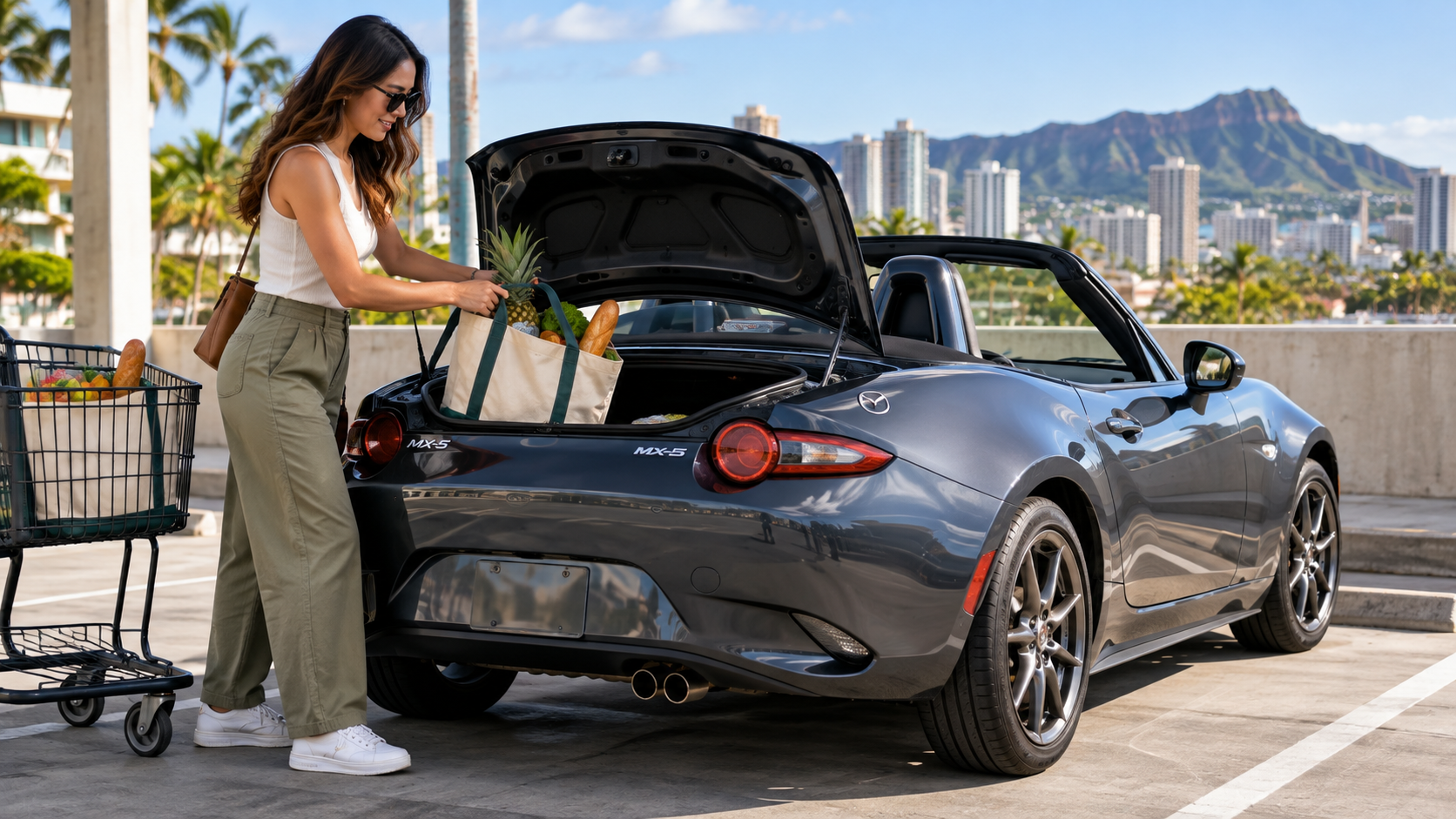
Miata daily driving in Honolulu means considering your parking space, usual errands, and the people who ride with you. A Mazda MX-5 Miata brings compact dimensions and lively steering to familiar streets. However, its two-seat cabin and small trunk require some planning. Before choosing this roadster, consider how your weekly routine works with a smaller car. The answer starts with the places you park and the belongings you carry. How the Mazda MX-5 Fits Into Honolulu Parking The 2026 Mazda MX-5 Miata measures about 154 inches from bumper to bumper. Consequently, its short body occupies less curb space than a longer sedan or SUV. Therefore, finding a suitably sized parking space may feel simpler in crowded shopping areas. However, the outer dimensions do not tell the entire story. Does a short car always make parking effortless? No. Additionally, you still need room to turn, open the doors, and see nearby obstacles. The soft-top Miata has a turning circle of approximately 30.8 feet. That measurement describes the space needed to complete a circular turn. Still, tight garage ramps and narrow entrances require attention to more than steering geometry. The car also sits low to the pavement. Therefore, a steep driveway or raised parking stop deserves careful inspection. For this reason, a low front bumper may approach a steep transition before the wheels reach it. Additionally, painted lines do not reveal a parking stop's height. Approach unfamiliar ramps slowly and assess clearance before moving forward. For a useful parking test, think through your usual destinations before visiting the dealership: Home parking: Check the available space, driveway slope, and door-opening room. A compact footprint will not eliminate a steep ramp or a narrow entry. Work parking: Consider garage ramps, turning spaces, and whether taller parked vehicles block your view. Practice positioning the Miata carefully in a suitable space. Errand stops: Think about curb height, parking stops, and how easily you can enter and exit. The best test reflects locations you use each week. Still, the MX-5's compact body is an advantage worth testing, not a promise that every space will work. Consequently, a familiar parking scenario gives you more useful information than looking at exterior measurements alone. What Drivers Should Know About Miata Visibility In the MX-5, the driver's seat places you closer to the road than in a taller crossover. Consequently, that position changes the viewing angle through the windshield and side windows. As a result, the hood, curbs, and surrounding traffic may appear different during your first drive. Give yourself time to settle into the seating position before moving. Can a lower seat make tall vehicles harder to see around? Yes. A large SUV or delivery van can obstruct the view across adjacent traffic lanes. However, careful positioning and proper mirror adjustment remain essential in any car. In addition, look over your shoulder when necessary. Avoid relying entirely on a camera or warning indicator. Mazda lists Blind Spot Monitoring among the 2026 MX-5 Miata's safety technologies. This feature can warn of certain nearby vehicles during lane changes. Still, its detection limits matter, and it cannot replace direct observation. Ask the dealership to demonstrate the indicators on the exact trim you plan to drive. Visibility also changes when backing out between taller parked vehicles. Therefore, move slowly and pause when your line of sight is restricted. Additionally, check both directions as your view opens. If the surrounding area remains unclear, do not continue until you can proceed safely. During a demonstration, adjust the seat and mirrors before checking forward and side visibility. Then, compare how easily you notice low curbs, crossing pedestrians, and approaching traffic. The goal is familiarity with the roadster's viewpoint, not an assumption that smaller size guarantees easier maneuvering. How Miata Seating and Comfort Suit Daily Travel The MX-5 has two seats, with no rear passenger row. That layout establishes a clear limit before any discussion of comfort. You can bring one passenger, but a third person requires another transportation option. For households that drive with children, coworkers, or relatives, this limitation deserves serious thought. Will every driver fit comfortably in the Miata? No single dimension can answer that question. Mazda lists 43.1 inches of legroom, yet leg length alone does not describe seating fit. Headroom, shoulder space, torso height, and preferred driving posture also matter. Therefore, a proper seat test should come before assumptions based on your height. Start by moving the seat until you can comfortably reach the pedals and steering wheel. Check whether your knees have sufficient space through the full pedal motion. Additionally, confirm that you can see the instruments without leaning forward. Your passenger should complete the same comfort assessment on their side. In addition, getting into a low car requires different movements than stepping into a crossover. Try entering and exiting several times if your daily parking space limits door opening. Furthermore, sit in the cabin for several minutes instead of making a quick first impression. Notice your shoulder position, lower back support, and access to personal items. Still, driving enjoyment can coexist with a thoughtful comfort check. The MX-5 places controls near the driver and uses a focused two-seat layout. Nevertheless, that intimate cabin will not fit everyone's routines. Spend enough time in the seat to judge your own commute, not someone else's favorite driving setup. What Fits Inside the Mazda MX-5 Trunk The 2026 MX-5 soft-top offers approximately 4.59 cubic feet of trunk space. That figure indicates enclosed storage volume, but it cannot guarantee that a particular object fits. Therefore, the trunk opening and shape matter as much as the total volume. A narrow suitcase may fit while a rigid box of similar volume does not. Could the Miata handle a routine grocery trip? Yes, for some shopping loads. Several small grocery bags or compact personal items may fit, but a large weekly purchase could exceed the available space. Moreover, the cabin has limited room for overflow. Therefore, test your usual purchases against the trunk opening before committing to one-car ownership. Three questions make a cargo check more useful: What do you carry each week? Think about grocery bags, work equipment, and smaller personal items. Measure the objects you cannot leave behind. Will each item pass through the opening? Check height, width, and rigid corners instead of relying on cargo volume alone. A flexible bag may be easier to position than a hard case. Can the items remain secure? Keep the driver's footwell and view unobstructed. Do not place loose objects where they could interfere with driving or become hazardous during a stop. Moreover, the cabin should not serve as a substitute trunk. For this reason, even a small object needs a secure location during travel. Additionally, packing the passenger seat removes your only available passenger position. That distinction matters for couples who share errands or commute together. If you routinely transport large purchases, bulky equipment, or several passengers, the Miata may not meet those needs alone. However, drivers with lighter carrying demands may find its trunk sufficient. The most reliable answer comes from checking the items that appear in your own week. Deciding Whether a Miata Works as Your Daily Car The Miata rewards a driver who enjoys precise steering and a direct connection to the road. Its 2.0-liter engine produces 181 horsepower, and rear-wheel drive places propulsion at the back wheels. Additionally, the compact layout makes the car distinct from a family crossover. Still, an enjoyable drive and a suitable daily car are separate questions. The available six-speed manual gives the driver direct control of gear selection. That means operating a clutch pedal and shifting gears during each journey. In heavy traffic, those actions require regular input. By contrast, an available automatic on selected trims offers a different routine. Therefore, compare transmissions using the kind of traffic you encounter during your commute. Before deciding whether the MX-5 should be your primary car, consider three ordinary situations: Your commute: Try the seating position, steering, and transmission through stops and moderate acceleration. Notice how you feel after a drive resembling your normal trip. Your passengers: Confirm that two seats suit the trips you make each week. Plan separately for occasions when you need to carry more people. Your errands: Check actual bags, parking spaces, and the places you visit most. A short test with familiar tasks reveals more than a showroom inspection. For solo commuters or two-person households, the MX-5 brings excitement to familiar Honolulu streets. However, it asks for careful choices about passengers and belongings. That tradeoff deserves attention before the keys become part of your daily routine. At Cutter Mazda Honolulu, ask to explore a 2026 Mazda MX-5 Miata and test its seating, visibility, and parking manners. Compare available transmission options if both are offered for your chosen trim. Additionally, bring measurements for any essential bags or equipment. Then, choose based on how the roadster works during the ordinary moments of your week.

Remove Car Window Fog Hot Weather in Honolulu Safely

Remove car window fog hot weather problems in Honolulu by first finding which side of the windshield holds the moisture. Furthermore, summer humidity can create fog even when the air outside feels warm. Strong cabin cooling can chill the glass enough for moisture to collect on the outer surface. By contrast, interior moisture can form for a different reason. Therefore, the fastest response starts with locating the condensation before changing any climate controls. Why Does a Windshield Fog in Hot Weather? Summer windshield fog forms when humid air reaches glass that has cooled below the surrounding dew point. Dew point is the temperature where airborne moisture starts turning into liquid droplets. Because air around Honolulu often carries substantial moisture, a cold windshield can cross that threshold quickly. Meanwhile, your Mazda air conditioner cools the cabin and the windshield near the dashboard vents. Warm humid air remains outside. If the outer glass becomes cool enough, water can gather across the exterior surface. The result can look much like interior fog from the driver seat. Why can this happen during a sunny drive? Heat outside does not prevent condensation when the glass itself stays cooler. Instead, the temperature difference between the glass and nearby air controls when droplets form. Therefore, a heavily cooled cabin can contribute to exterior fog during humid weather. By contrast, interior fog follows the same moisture principle from the opposite side. Moist cabin air reaches cooler glass, then droplets collect inside. Wet clothing, damp floor mats, and passengers can raise cabin moisture. In addition, recirculated air can keep that moisture inside longer. Is the Fog Inside or Outside Your Windshield? The wet surface identifies whether you need cabin dehumidification or exterior clearing. Therefore, before changing several controls at once, find where the moisture sits. That small check can save time and keep your attention on visibility. If the wipers clear the cloudy area immediately, the moisture is probably outside. For this reason, exterior fog usually leaves a clean path where the wiper blade passes. However, the cloudiness may return if the glass stays much cooler than the outdoor air. Interior fog will remain after the wipers sweep. While parked safely, you can also touch the inside glass near the edge. A damp interior surface points toward moisture inside the cabin. Therefore, once you know the location, use the matching response: Exterior moisture calls for the wipers first. A slight cabin temperature adjustment can also reduce the glass temperature gap. Interior moisture calls for dry airflow across the windshield. Air conditioning and fresh air intake can reduce moisture inside the cabin. Persistent fog on both sides deserves closer attention. Dirty glass, trapped cabin moisture, or weak HVAC operation may be involved. Because visibility can change quickly, avoid experimenting with several settings while moving through traffic. Instead, use the simplest response that matches the wet surface. Pull over safely if the windshield becomes too cloudy to see through clearly. How Mazda Climate Controls Clear Interior Fog Mazda windshield defogging directs airflow toward the glass and can use air conditioning to dry that air. Furthermore, the air conditioner does more than lower cabin temperature. It also removes moisture as cabin air passes across the cold evaporator. Consequently, drier air reaches the windshield vents after moisture leaves the moving air. That airflow can absorb moisture near the interior glass. Therefore, air conditioning can support defogging even when you do not want a colder cabin. Why does fresh air matter during interior fog? Recirculation keeps using air already inside the cabin. If passengers, damp clothing, or wet mats have raised cabin moisture, that same air may stay humid. Fresh air intake replaces part of that trapped moisture with outside air. However, outdoor air can also carry plenty of moisture during Honolulu summers. Interior moisture can still rise above outdoor levels when several people occupy the car. For this reason, the fresh air setting can support clearing when recirculation leaves the glass cloudy. Moreover, temperature matters during windshield clearing. Very cold air can make the windshield colder, which may encourage exterior moisture. Therefore, use enough cooling to dry cabin air without making the glass unnecessarily cold. A moderate temperature setting can keep interior clearing effective while reducing exterior condensation. How to Clear Exterior Fog Without Overcooling the Glass Exterior fog forms when humid outdoor air meets glass that is colder than the surrounding dew point. The wipers can remove those droplets because the moisture sits outside. However, wiping alone may not stop new droplets from forming. Why can the fog return seconds later? The glass may still be cold enough for fresh moisture to condense. Therefore, the next step is reducing the temperature difference across the windshield. Raise the cabin temperature slightly if the interior feels very cold. You can also reduce aggressive cooling near the windshield. Consequently, these changes let the glass warm gradually while the wipers maintain a clear view. In addition, fresh air can reduce the sharp temperature difference between the cabin and outside air. A moderate fan setting can keep the cabin comfortable without chilling the glass as strongly. Avoid turning the cabin hot in one sudden move. A smaller adjustment gives you more control and keeps the drive comfortable. The goal is clear glass with less temperature contrast, not a dramatic cabin temperature swing. Still, exterior fog that appears every morning may follow the same route and humidity pattern. Therefore, note when it forms and how quickly the wipers clear it. That pattern can show whether the issue follows weather or another concern. What to Check Before a Humid Honolulu Drive Clear glass starts before you leave the parking space. A clean windshield gives moisture fewer dirty spots where droplets can collect. Film from interior cleaners, fingerprints, smoke residue, or dust can make haze look worse. Additionally, cabin moisture deserves a quick check. Damp towels, beach gear, umbrellas, or floor mats can add water vapor inside the car. Removing or drying those items can reduce interior fog later. Before driving, review a few visibility items: Clean both sides of the windshield with a glass safe cleaner. Clear glass makes new condensation easier to identify. Check the wiper blades for streaking or chatter. Exterior fog clears faster when the blades maintain even contact. Confirm that windshield airflow responds when selected. Weak airflow can make interior moisture slower to clear. Furthermore, know where the fresh air and recirculation controls are located before visibility drops. Learn how your Mazda directs airflow toward the windshield. Familiar controls require less attention when fog appears unexpectedly. Even so, persistent fog despite clean glass and correct climate settings may warrant an HVAC inspection. Weak airflow, drainage trouble, or another climate control concern may need diagnosis. Cutter Mazda Honolulu can inspect the components involved in cabin airflow and windshield clearing. Remove car window fog hot weather problems by matching the response to the moisture location. Honolulu humidity can create both interior and exterior condensation. A quick surface check, correct airflow, clean glass, and sound wipers can keep your view clearer throughout summer driving.